

“To achieve peace, Hamas must be destroyed,
Gaza must be demilitarised,
and Palestinian society must be deradicalised.”
-Benjamin Netanyahu
That is how the argument begins.
Before bombs. Before borders. Before history.
With a diagnosis.
A society must be deradicalised.
When power rewrites truth, independent journalism matters.
This work is sustained by readers, not institutions.
If you want it to continue, support it.
First, what does “deradicalisation” actually mean?
In counter-terror policy, deradicalisation refers to the process of disengaging individuals from violent extremist ideology and reducing their willingness to use or support violence for political ends.
It is typically applied to:
• Recruited militants
• Convicted extremists
• Members of armed ideological groups
• Individuals who voluntarily adopt violent doctrine
It is not applied to:
• Entire civilian populations
• Occupied territories
• Refugee communities
• Children born into blockade
When a state speaks of “deradicalising” a society it occupies, what it is implying is that the society itself is ideologically diseased.
But under the formal definition, deradicalisation is meant for individuals who choose extremist violence.
Not populations resisting military domination.
Not civilians subjected to siege.
Not children raised under drones.
If we used the term honestly, if any terms are still used honestly, the more urgent deradicalisation project would involve:
Dismantling doctrines that justify collective punishment.
Ending rhetoric that dehumanises entire populations.
Reversing policies that treat starvation as leverage.
Challenging the belief that security requires permanent domination.
If deradicalisation means reducing the ideological acceptance of civilian harm, then the state normalising that harm must also fall under its scope.
So let us apply the definition properly.
1. Who holds overwhelming military dominance?
Israel is a nuclear-armed state.
It possesses one of the most technologically advanced militaries in the world.
It enjoys deep integration with American intelligence and defence systems.
It receives billions in military aid annually from the United States.
Hamas does not have an air force.
Hezbollah does not control satellites.
Neither controls regional supply chains or Western diplomatic protection.
Deradicalisation is normally directed at actors who lack power but adopt violence as ideology.
Here, the overwhelming military dominance rests with Israel.
2. Who expands and who resists?
Since 1948:
• Mass displacement of Palestinians during the Nakba
• Destruction and depopulation of villages
• Permanent occupation after 1967
• Settlement expansion across the West Bank
• Annexation of East Jerusalem
• Control of the Golan Heights
• Repeated invasions of Lebanon
• Routine airstrikes in Syria
• Cross-border assassinations
• Bombing of Iraq’s nuclear reactor in 1981
Hamas operates within Gaza.
Hezbollah operates within Lebanon.
Israel operates across borders, not limited to Gaza or Lebanon.
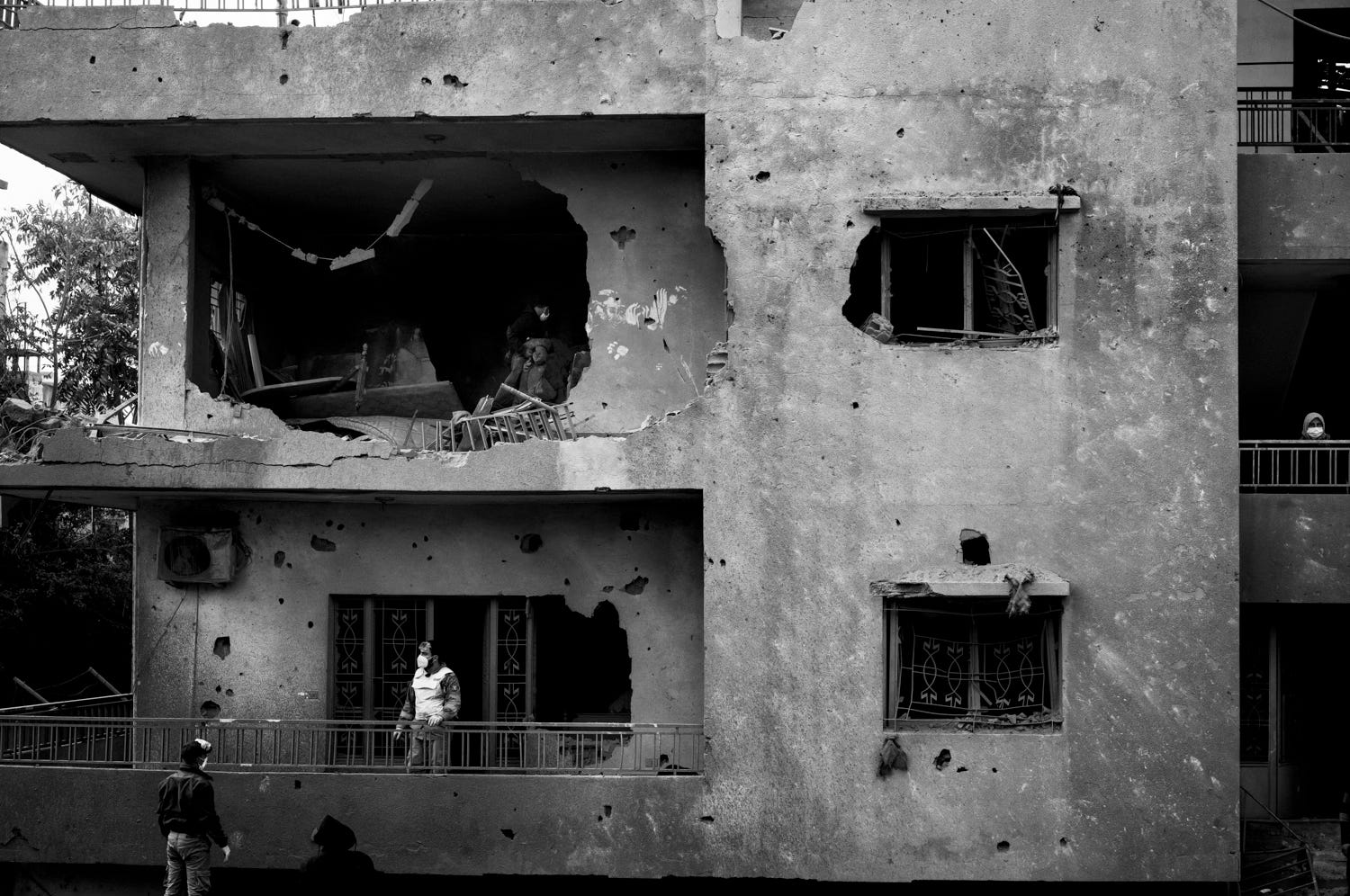
Aggression is directional.
Since 1967, Israel has projected force beyond its recognised borders as a matter of policy. It has invaded Lebanon. It has sustained years of air campaigns in Syria. It has struck Iraq and Iran. It has carried out assassinations across the region.
Iran, for its part, has built influence through proxies such as Hezbollah and support to Hamas and other groups. Syria, particularly under Assad, functioned as a transit corridor and political ally within that alignment.
But this is not symmetry.
Iran did not occupy Tel Aviv.
Syria did not blockade Haifa.
Neither controls Israeli airspace, water, borders or civilian movement.
Iran funds and arms regional actors for the same reason Western states fund and arm their allies: to protect strategic depth and deter encirclement.
The United States funds Israel.
Britain arms its strategic partners.
France maintains influence networks in Africa.
Iran operates within that same logic of sovereignty and deterrence.
That is geopolitics.
What is different is structural control.
Israel occupies Palestinian land.
Israel enforces siege.
Israel expands settlements under military protection.
Israel conducts sustained cross-border strikes as routine policy.
Regional states manoeuvre for influence.
Israel exercises dominance over a captive population.
Influence is not occupation.
Proxy support is not settlement expansion.
Strategic deterrence is not permanent control of another people’s daily life.
That distinction matters.
This is not symmetry.
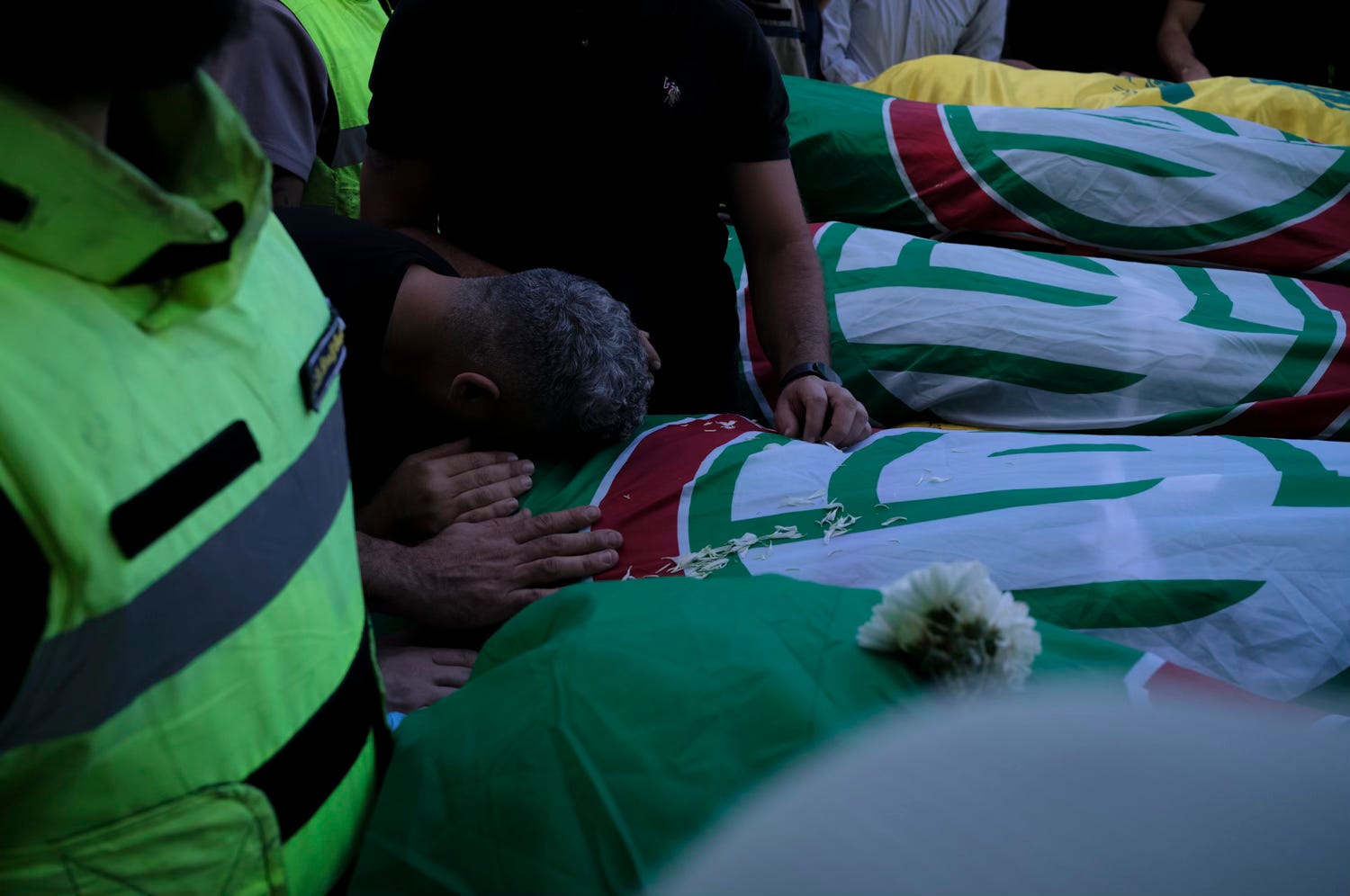
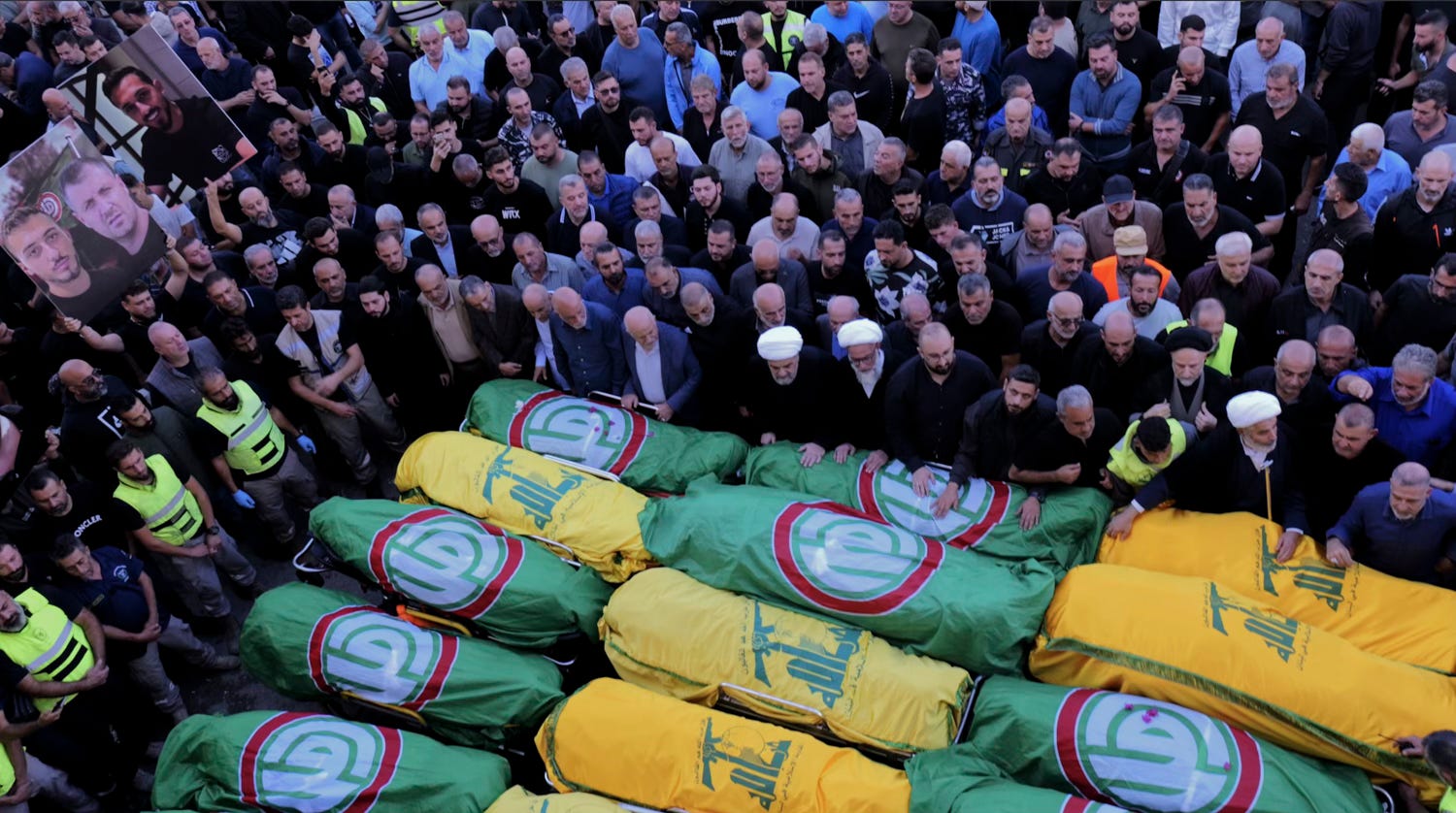
3. Who controls the daily architecture of life?
Israel controls:
• Palestinian airspace
• Territorial waters
• Borders and population registry
• Movement permits
• Water allocation in much of the West Bank
• Imports and exports into Gaza
That is not reaction.
That is structural control.
Deradicalisation is normally applied to those who choose violence.
Control of another people’s daily architecture of life is not deradicalisation.
It is domination.
4. The lie at the centre
The rhetoric tells us Hamas is the aggressor.
Hezbollah is the destabiliser.
Iran is the mastermind.
Syria is the accomplice.
The story is familiar.
Iran is framed as expansionist.
Syria is framed as destabilising.
Hezbollah is framed as terrorist.
Hamas is framed as barbaric.
Then the language escalates.
“A fight between good and evil.”
A war for civilisation.
A defence of the West.
When conflicts are framed this way, structure disappears. Power disappears. History disappears.
The occupied become the ideological threat.
The besieged become the radicalised.
The armed regional rival becomes the existential danger.
Meanwhile, the state that:
• Occupies territory
• Expands settlements
• Enforces blockade
• Controls borders and airspace
• Projects sustained military force across multiple sovereign states
is framed as defensive.
Iran supports armed allies.
Syria aligned with them.
But neither occupies Israeli land.
Neither controls Israeli movement.
Neither dismantles Israeli infrastructure as routine policy.
Yet in the Western narrative, Iran becomes the epicentre of instability while Israeli structural dominance is treated as normal.
This is the lie at the centre.
Regional rivalry is elevated into primary aggression.
Structural occupation is downgraded into background noise.
Iran manoeuvres for influence in the same way global powers manoeuvre for influence.
Syria aligned within that same regional chessboard.
Israel, by contrast, maintains permanent control over another people’s daily existence.
But the narrative flips the hierarchy.
Influence becomes the headline threat.
Occupation becomes administrative detail.
That inversion is not accidental. It is strategic.
Because once the frame shifts to “Iranian expansionism” or “terror networks,” the question of land, blockade, settlements and structural domination disappears.
And without structure, there is no aggressor. Only chaos.
That is the centre of the lie.
And it is deliberate.
5. The real reality. The uncomfortable one.
If radicalisation means the ideological normalisation of violence against civilians, then we must examine doctrine.
Collective punishment.
Siege.
Starvation declared openly as policy.
Hospitals flattened.
Universities erased.
Entire neighbourhoods reduced to rubble.
Children killed in the tens of thousands, shot deliberately in the head and chest.
IVF clinics destroyed.
Journalists targeted and killed.
Humanitarian aid blocked.
Settlements expanded in the midst of war.
If radicalisation means dehumanising language and systemic civilian harm as policy, then this definition cannot be applied selectively.
It either applies universally.
Or it is propaganda.
6. The crimes
Dispossession.
Occupation.
Settlement expansion.
Apartheid structures in the West Bank.
Blockade of Gaza since 2007.
Repeated large-scale bombardments of Gaza in 2008, 2012, 2014, 2021 and 2023 onward.
Invasion of Lebanon in 1982.
Siege of Beirut.
War with Lebanon in 2006.
Continued cross-border strikes and bombardment of southern Lebanon in the years that followed.
Escalated Israeli air and artillery attacks across Lebanese territory from October 2023 onward.
Sustained air campaign in Syria.
Strike on Iraq’s Osirak reactor in 1981.
Cross-border assassinations.
Administrative detention without charge.
Collective punishment.
Famine used as leverage.
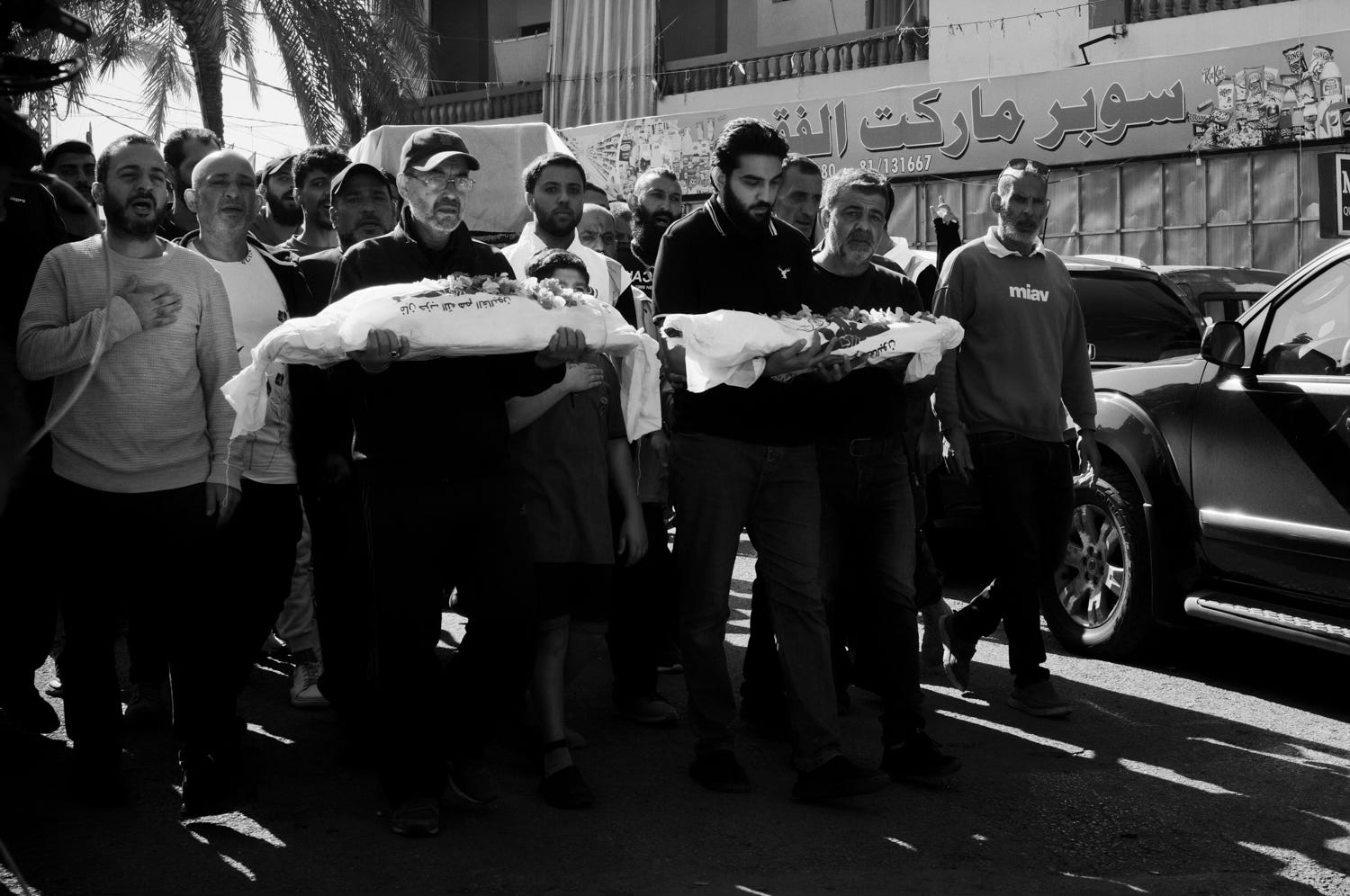
And empire’s role:
Billions in U.S. military aid.
Diplomatic shielding at the United Nations.
Arms exports from Western allies.
Criminalisation of protest in Western democracies.
This is not symmetrical chaos.
It is structured dominance backed by empire.
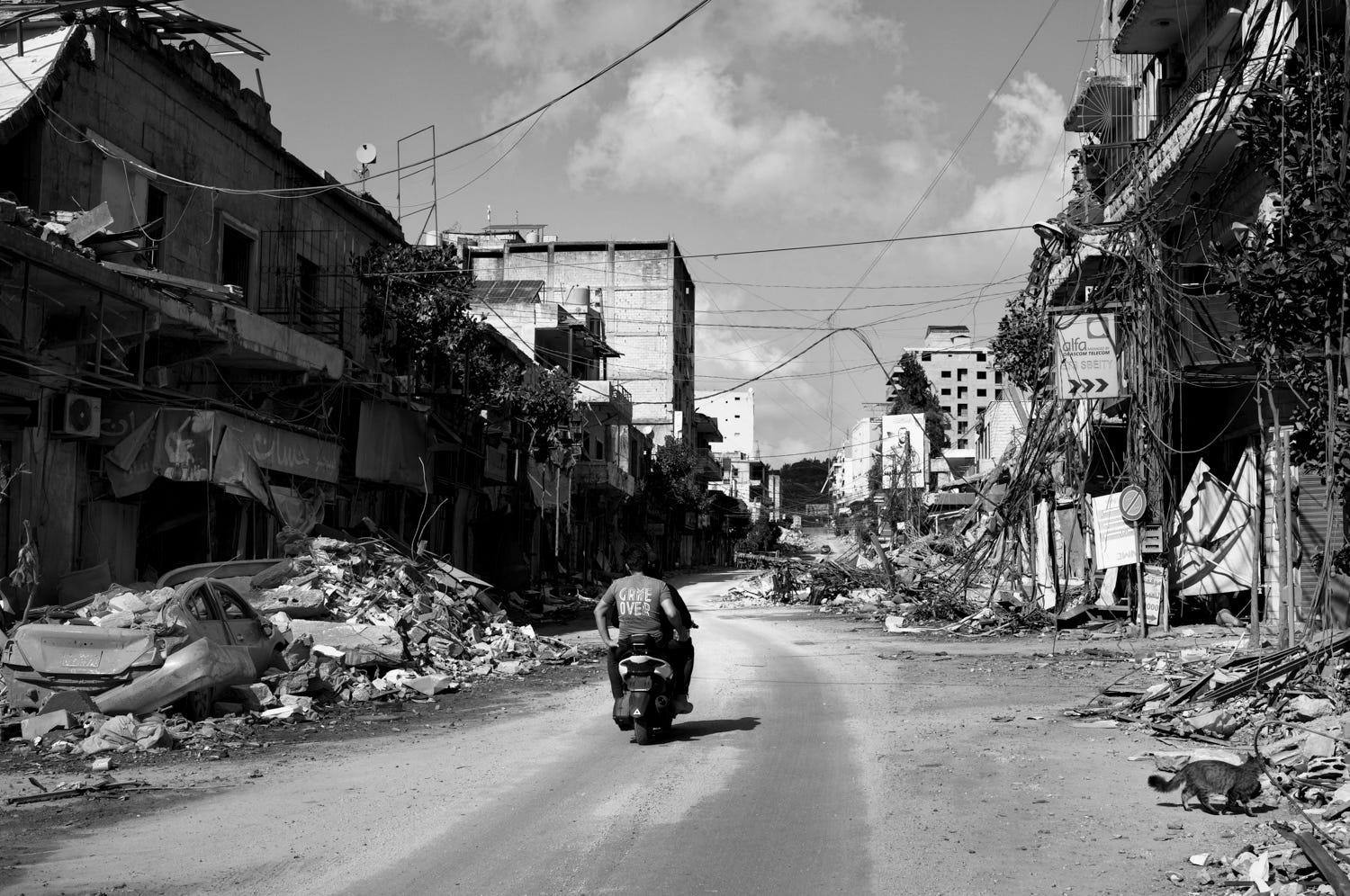
“This is a battle between the forces of civilisation
and the forces of barbarism.”
-Benjamin Netanyahu
And indeed it is.
But civilisation does not starve children.
Civilisation does not flatten hospitals and call it security.
Civilisation does not expand settlements while preaching peace.
Civilisation does not weaponise the word “deradicalisation” against the occupied.
If deradicalisation means dismantling the ideological acceptance of civilian harm, then the project does not begin in Gaza.
It begins with the state that has normalised that harm.
And we know exactly who
the BARBARIAN is.
When power rewrites truth, independent journalism matters.
This work is sustained by readers, not institutions.
If you want it to continue, support it.
Thank you Liz. Exactly this 💯
We need to get behind a campaign to deradicalise israel, the source of all the unrest in that region and the genocide of innocent native Palestinians.
Such a powerful painful reality check you offer, and so timely as Trump blusters and postures with his equally ironic Board of Peace. As a kid growing up in the US, I had four first cousins and an aunt in Israel. Regularly, we bought symbolic trees to be planted there. Only a couple of years ago, I watched a gut-wrenching documentary called My Tree, about a Canadian Jewish journalist who sought to find his tree, only to discover the Palestinian village razed to create the “forest.” The myth not the might of Israel has been marketed and sold to millions, which is why your essay is so essential. Thank you for naming the truth.