
Exile Without End
I have documented some of the harshest conditions. I have never encountered stillness like this.

This piece is part of a series drawn from time spent in the Sahrawi refugee camps and along the frontlines of Western Sahara.
Mbaraka Mokhta remembers the moment the sky turned against them.
The sound came first. Unfamiliar. Tearing through the air before anyone understood what it was.
Then the ground broke. People ran without direction, calling for children they could not see.
After that, there was only one thing left to do. Leave.
By the time the dust settled, there was only movement.
Away. Always away. Urgent. Chaotic. Blind.
And then, the long walk.
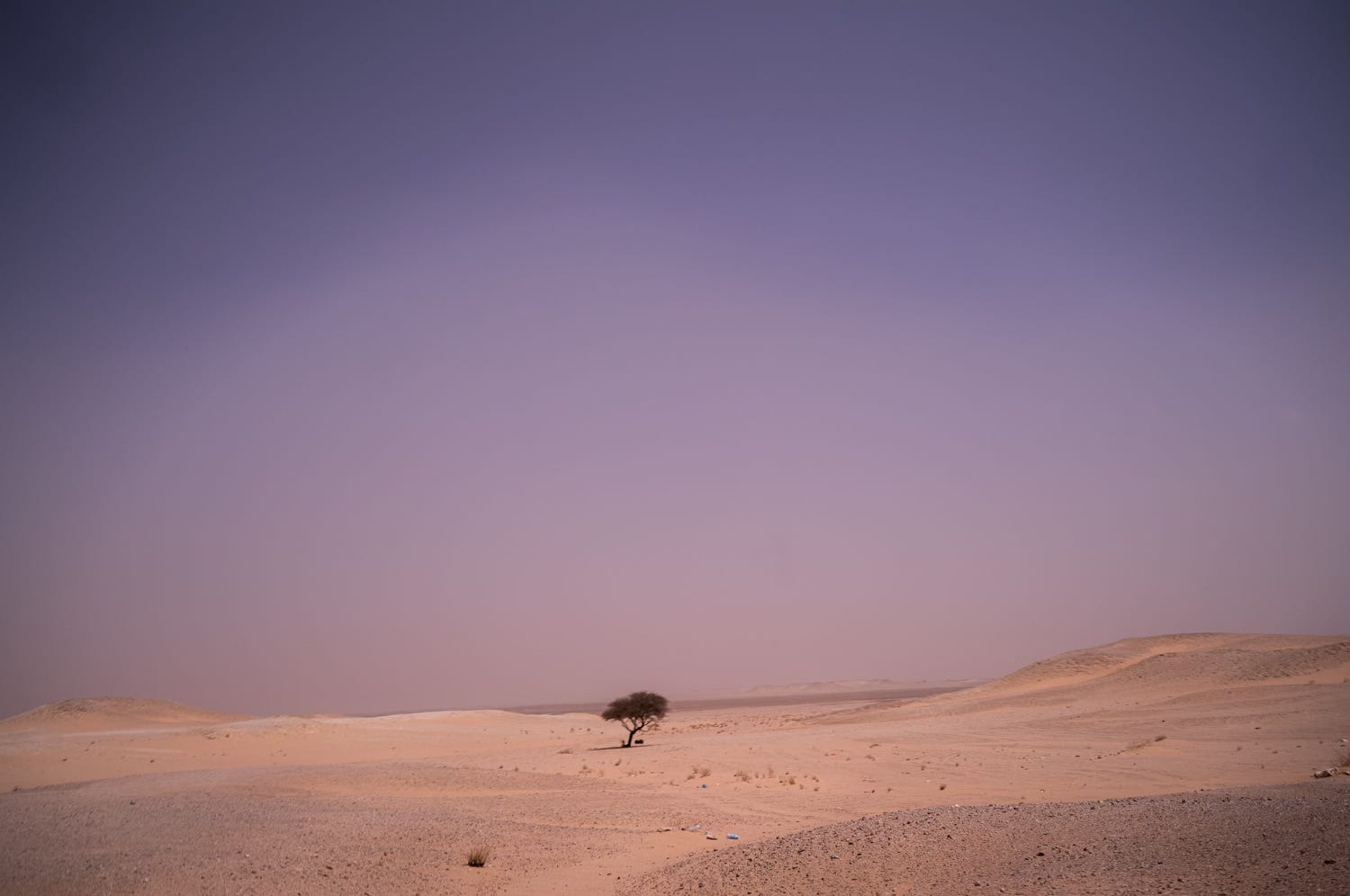
For weeks I walked the camps, searching for what I thought I would find. Movement. Routine. The quiet choreography of daily life.
What presented itself was something else entirely.
It was Ramadan when I first arrived in the Sahrawi refugee camps, about an hour north-east of Tindouf. These camps sit not in Western Sahara itself, but across the border in Algeria, on the Hamada. A vast, stony desert plateau often described as one of the most inhospitable places on earth.
By day, the camps lay still. Not quiet in the way a place rests, but quiet in a way that felt deliberate, almost held. The air sat heavy over the Hamada, heat pressing down onto rock and dust. This was not the shifting sand dunes people imagine when they think of the Sahara, but a hard, unyielding ground that seemed to absorb and hold the heat.
Doors closed. Pathways empty. No voices carried on the wind, no clatter of work, no rhythm to follow. Only the occasional flicker of life behind canvas or mud walls.
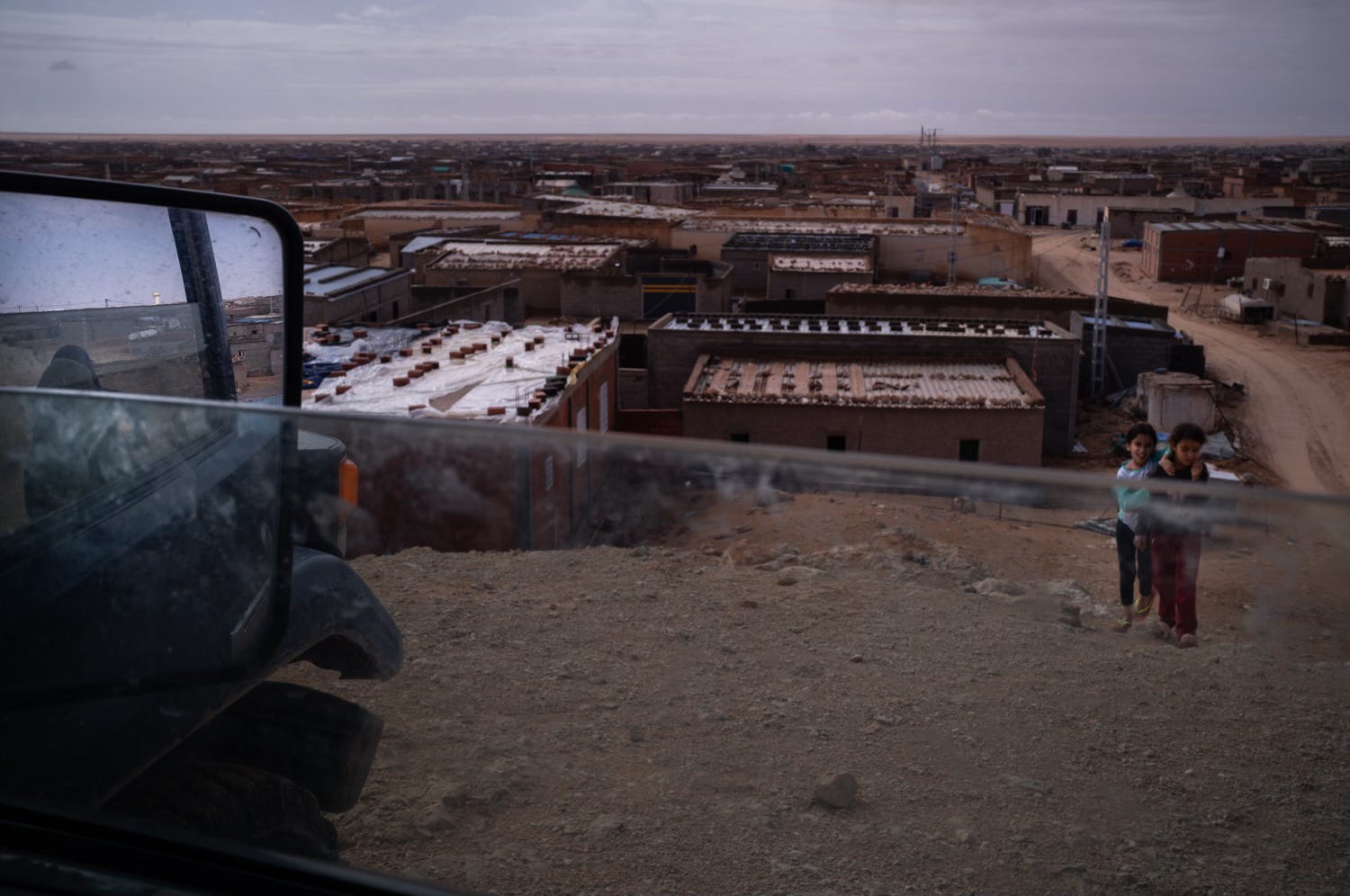
In the evenings, a little movement returned. Soft, contained. Then it folded back in on itself.
I told myself it was Ramadan.
Then came Eid. The end of fasting. A return, I thought, to something recognisable. I woke early, almost expectant, stepping out into the light with the quiet anticipation of witnessing a place come alive.
But the stillness remained.


There were brief ruptures. Children appearing in the morning light, their laughter cutting clean through the silence before dissolving again. A few more in the evenings, shadows stretching long across the ground. Then nothing. The hours settling back into themselves.
It felt as though an entire society existed just beneath the surface. Present, but withheld. Not absent. Not gone. Suspended.
Even time seemed to loosen its grip. Day did not quite become day. Night did not fully arrive. The rhythm you rely on to understand a place simply was not there.
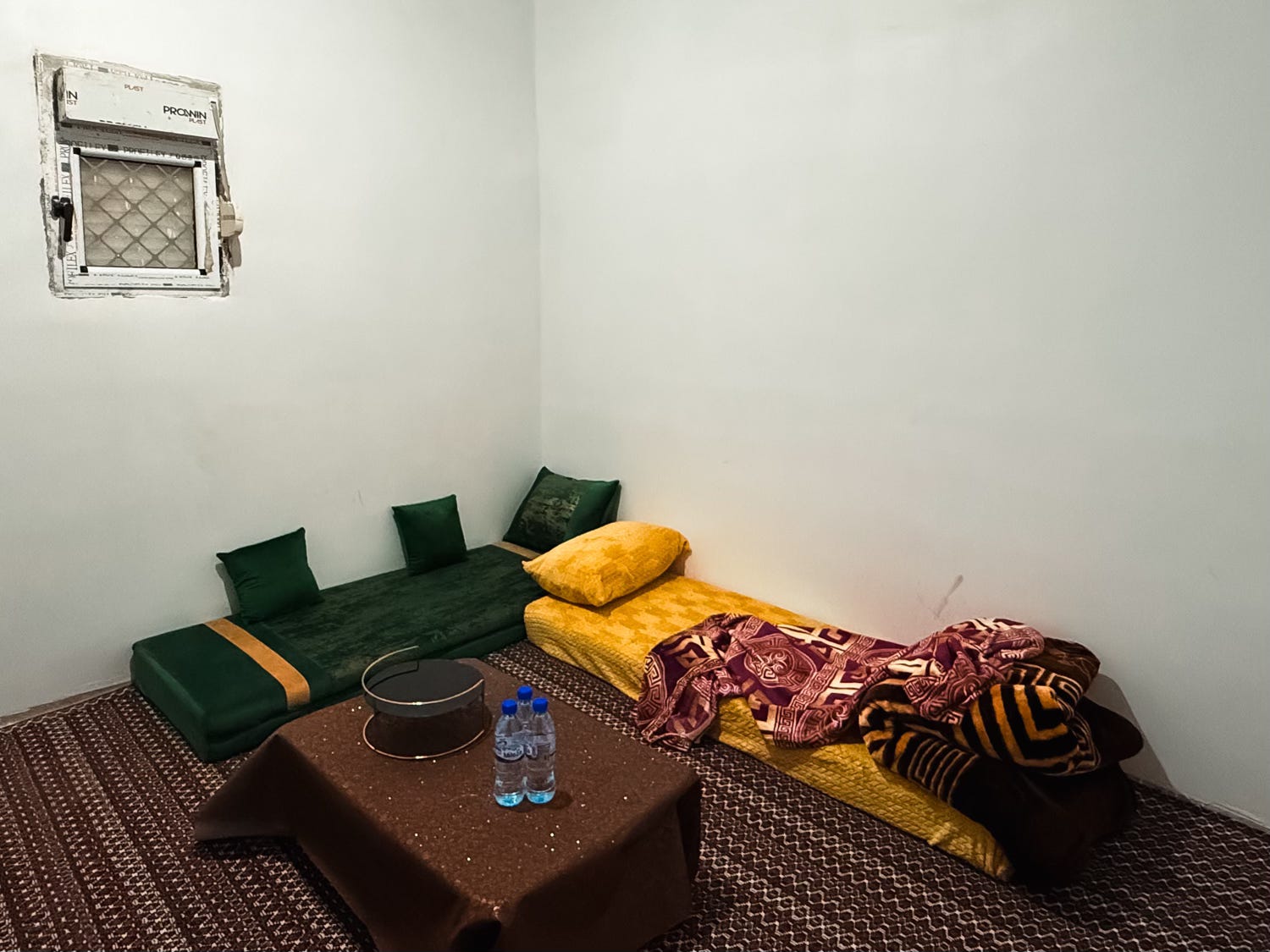
In my room, a thin mattress lay directly on the ground. By day, it was where I sat. At night, I would lie awake, staring into the corner where two huntsmen clung to the wall. They appeared during the day and disappeared by night, as though retreating from the desert at its harshest. A quiet rhythm we fell into. An unspoken agreement.
Outside, the wind would rise. Not a gentle movement, but a force. I could hear it long before I felt it. Rocks grinding down into sand, carried hard against the low tin roofs. A steady, relentless battering.
That was the sound that carried me into sleep.
By morning, the wind would settle.
And the stillness would return.
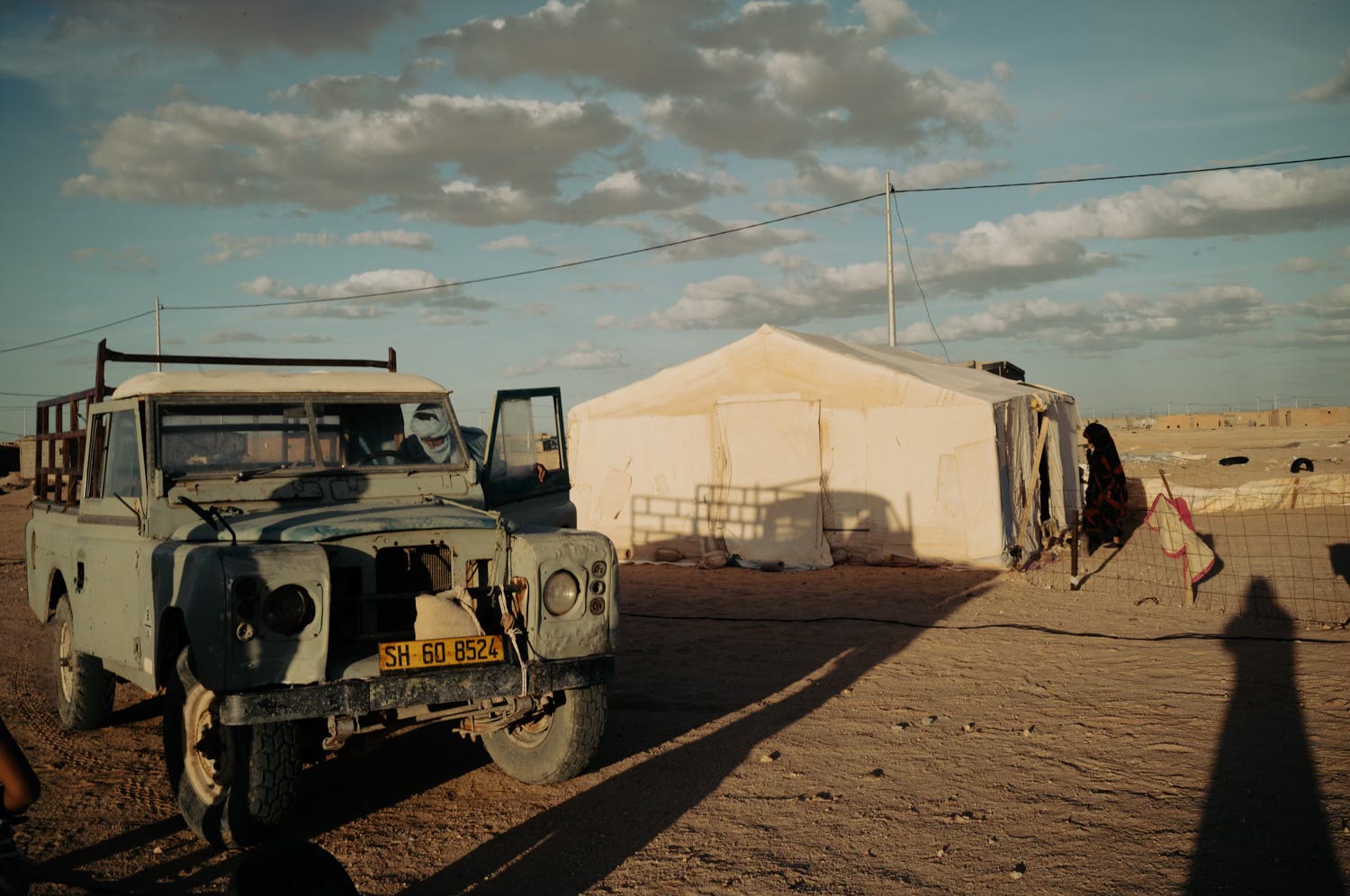
Every so often, the stillness would break. The low, familiar growl of an engine. Ageing Land Rovers, many brought across during the early years of exile, and old Mercedes-Benz cars, cast-offs from Europe, cheap and long past their intended life, pushing through the rocky unevenness of the Hamada.
There were no marked roads. Only tracks worn into the ground through repetition, instinct more than design. Tyres passed just under a metre from tents and mud houses, close enough to be felt, yet never crossing an invisible line. A system understood without being spoken. Movement without disruption.
And then, just as quickly, it would recede again.
Back into the stillness.
It sounds like peace. But it was not peace. It was stagnation with a pulse. An unease that sat just beneath the surface. Everything felt as though it was moving, quietly, somewhere out of sight. Like an undercurrent pulling the tide forward.
Yet on the surface, nothing shifted.
This is what a decolonisation process looks like when it is allowed to stall for half a century.
Mbaraka would walk for days to reach Algeria. Many did. Children in their arms, whatever they could carry held close. The rest left behind.
Fifty years have passed since the people of Western Sahara were driven from their land during Morocco’s advance into the territory. A people forced across the border on foot, into exile that was never meant to last.
Awala spoke matter-of-factly, as if the memory had never loosened its grip.
“I’m not sure how old I was. I had to count backwards to the day the bombs came. Maybe five.
I remember being at school when it happened. There was a loud sound. It was very sudden. We didn’t know what was happening. Then the ground trembled. People started running. Calling for children they couldn’t see. It was chaos.
The bomb hit the school. It destroyed it. I didn’t understand what was happening. A teacher grabbed us, rushed us out, and started lifting us into passing vehicles. We still had our school bags. Just children. No parents. They put us into whatever was driving past, anything with space, and sent us toward the border.”
He paused, watching one of the ageing Land Rovers move slowly across the Hamada, its engine cutting through the silence.
“Like that one. Exactly like that one. I was separated from my parents. For days, I didn’t know where they were. I didn’t know if they were alive.”
The engine faded.
The stillness returned.
And then, above it all, something moved.
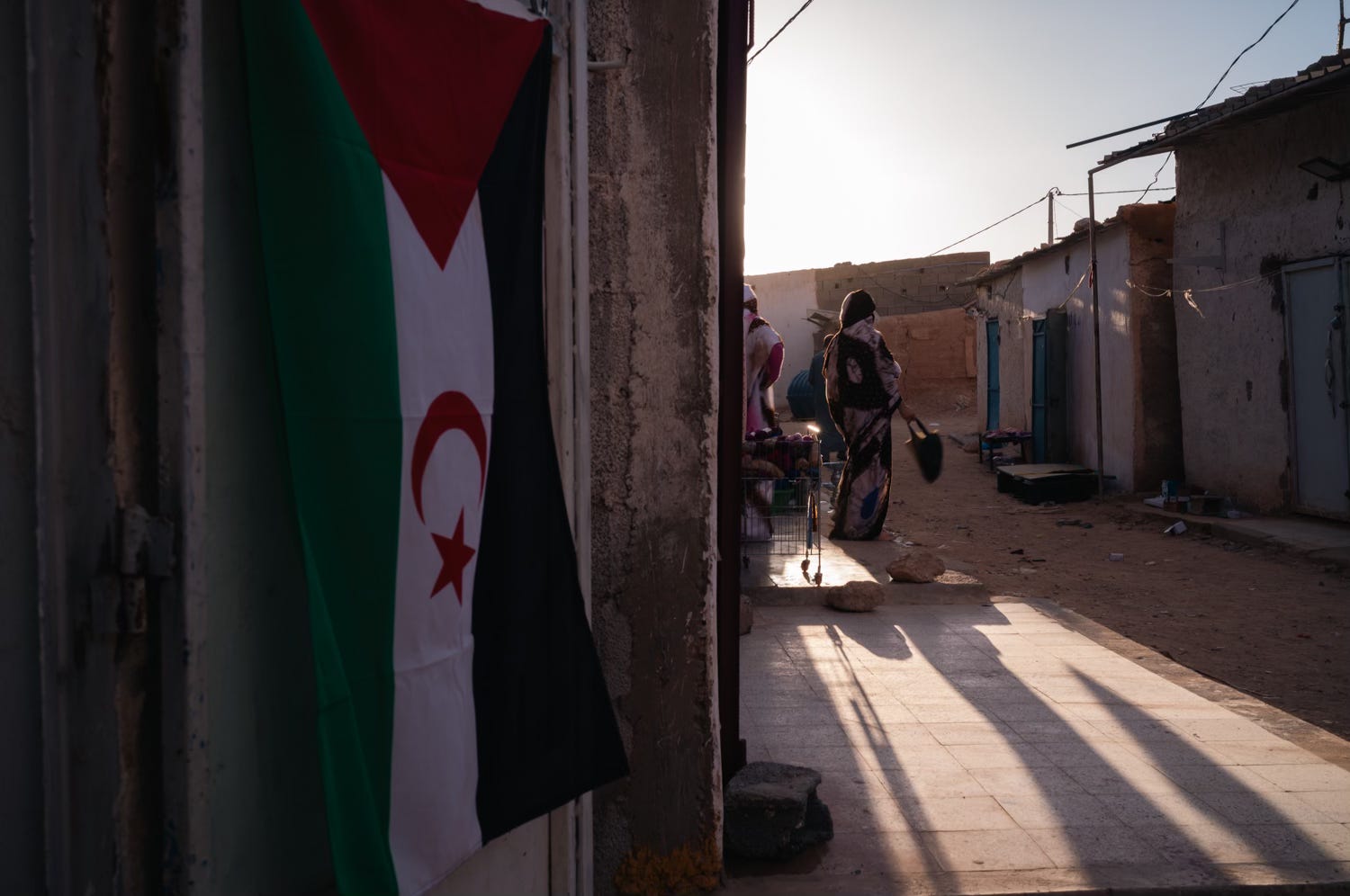
The Sahrawi flag flew high above tents and mud brick homes. A flag that echoed the struggles of another people. Palestinians.
Its colours carried a shared language. Black, white, green, and red. Resistance. Loss. Land. Return.
In a place where almost nothing moves forward, the flag does.
It does not belong to the Hamada. It belongs to somewhere else. Somewhere left behind, but not relinquished.
Like the Palestinian flag, it marks more than identity. It marks a claim. A refusal to disappear. A refusal to let exile become permanence.
Where life is held in suspension, the flag insists on direction.
In solidarity with the people of Western Sahara,
Liz
This piece is part of a series on Western Sahara. Related pieces:
Western Sahara Explained: A Decolonisation That Never Happened
Transit. Tension. Tindouf.
The Word That Comes to Mind Is: Temporary
The Hamada Was Never Meant To Hold Us
Life. Rewritten In Exile
Western Sahara: A Current Geopolitical Issue
Not Your Casbah
If this piece stayed with you, consider supporting the work.
This reporting is independently produced, funded through readers, paid and founding subscribers on Substack, and occasional direct contributions. Your support allows me to continue documenting stories like this from the ground.
A haunting story of the consequences of ethnic cleansing and genocide, which you never could have written if you didn't actually go there.
Thank you for giving the Sahrawi a smidgeon of the recognition they deserve.
I concur with the comment below. I appreciate your presence, witness, your exquisite prose. To convey in words the stillness you encountered bespeaks not just skillful but soulful prose.